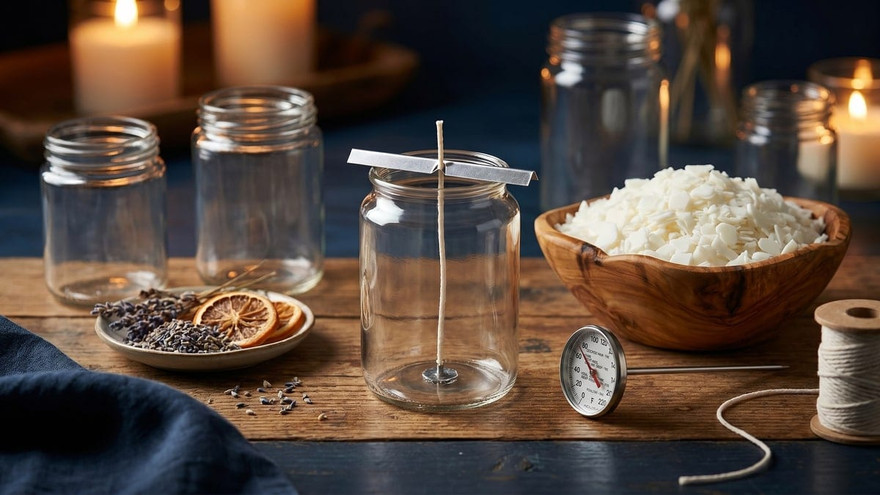
The difference between a candle that fills a room and one that smells like nothing usually is not the oil you chose. It is a handful of habits during the pour: the temperature you add fragrance at, how long you stir, the wick you pick, and whether you let the candle cure. Get those right and a modest fragrance load throws well. Get them wrong and even a premium oil disappoints. We have walked makers through these same fixes since 1999, and the list below is where almost every problem starts.
This guide covers the temperatures to add fragrance to each wax, how to scent a candle so it actually throws, and the mistakes that quietly ruin a batch. For a deeper dive on creating a candle scent and reading its three notes, see the scent guide; to browse oils, visit our fragrance oils.
What Temperature to Add Fragrance to Wax
Fragrance binds to wax in a narrow temperature window. Add it too cool and the oil will not disperse evenly; add it too hot and the lightest top notes degrade before the candle ever sets. The right add temperature depends on the wax.
Fragrance Add Temperatures by Wax
| Wax | Add fragrance at | In Celsius | Note |
|---|---|---|---|
| Soy | 180°F | ~82°C | Add after a full melt, then stir two minutes |
| Paraffin | 180°F | ~82°C | Same window as soy for most blends |
| Palm | 200–205°F | ~93–96°C | Palm holds heat for its crystal pattern, so add hotter |
Always confirm the maximum fragrance load and the recommended pour temperature for the specific candle wax you are using, since blends vary. Our soy wax guide and paraffin wax guide list those numbers per blend.
How to Scent a Candle the Right Way
Scenting is a sequence, and the order matters. These five steps are the same whether you are pouring one tester or a full batch.
How to Scent a Candle
-
1
Measure the fragrance by weight
Weigh the oil rather than eyeballing it, using at least the minimum recommended fragrance load for your wax. You can load up to the wax's recommended maximum, but never past it: the wax retains only so much oil, and any excess separates instead of adding throw.
-
2
Heat the wax to its add temperature
Melt the wax fully, then bring it to about 180°F for soy and paraffin, or 200 to 205°F for palm. Monitor it with a thermometer the whole time so you are adding at the right point and not scorching the wax.
-
3
Add the fragrance oil
Pour the measured oil into the melted wax once it reaches the add temperature. Adding at the right point lets the oil bind to the wax, which is what drives the scent throw.
-
4
Stir for a full two minutes
Stir gently but thoroughly. A short stir leaves oil unbound, which settles to the bottom and weakens the throw. Make two minutes your minimum.
-
5
Cure before you judge it
After pouring, let the candle rest about a week before the first burn. Curing is a resting period that lets the wax bind the fragrance molecules and lock in the throw. It is the cheapest fix for a weak candle and the step makers skip most often.
For the full walk-through of measuring and prepping wax before this stage, see How to Prepare Wax for Pouring.
Candle Making Do's
These are the habits that consistently produce a clean burn and a strong throw.
Candle Making Do's
Add fragrance at the right temperature
About 180°F for soy and paraffin, 200 to 205°F for palm. The right window lets the oil bind to the wax for a stronger throw.
Stir for a full two minutes
Short stirring leaves the oil unbound, so it settles to the bottom and the candle smells weak. Give it the full two minutes.
Trim the wick
Keep wicks trimmed before each burn: about 1/4 inch for paraffin, 1/8 inch for soy, and just above 1/4 inch for our wooden wicks. An untrimmed wick smokes, soots, mushrooms, and burns with too large a flame[3].
Preheat your containers
Warming the glass before you pour slows cooling, which helps prevent the wax shrinking, pulling away from the glass, and forming wet spots.
Use a thermometer
Monitor temperature through the whole process with a thermometer. It keeps you from scorching the wax and confirms you are adding fragrance and pouring at the recommended points.
Use the right wick
A wick too small for the container leaves a tunnel and weak throw, and wick type has to match the wax. Size with our guide to wicking and shop candle wicks.
Test before you scale
Pour and burn a single tester before mass producing. Many variables decide how a candle burns, and a test burn is the only way to confirm the whole recipe works together.
Candle Making Don'ts
Each of these is a common mistake that shows up in weak-throw and poor-burn questions.
Candle Making Don'ts
Don't use crayons to dye candles
Crayon wax is not made to burn in a candle. It clogs the wick, burns poorly, and can throw off a bad smell. Color with candle dyes made for the job, in liquid or block form.
Don't melt wax in the microwave
You cannot monitor temperature in a microwave, the wax melts unevenly, and hot spots scorch it. Scorched wax smells like burned popcorn and ruins the batch. Use a double boiler or melting pot.
Don't use perfume in place of fragrance oil
Perfume and cologne are alcohol based, not formulated to burn in wax[2]. They will not throw, can clog the wick, and the alcohol is flammable. Use fragrance oils made for candles.
Don't burn a candle too long
After a few hours the wick needs a trim. Burning past that point builds smoke, soot, and mushrooming that masks the hot throw and can grow the flame into a hazard[3].
Don't put a finished candle in the fridge
Fast cooling can crack the glass, shrink the wax into wet spots or sink holes, and weaken the throw. Let candles cool slowly at room temperature. The only exception is loosening a pillar or votive from a mold, and only for 5 to 10 minutes.
Don't overload the fragrance
More oil does not mean more throw. Each wax retains only so much; past its maximum load the excess separates from the wax, which can create gooey spots and even a fire risk. Stay within the recommended load.
If your candles still smell weak after following these, make sure you are using a wax designed for candles, check your fragrance load, and make sure to cure your finished product. Our scent guide walks through every lever behind a stronger candle.
Candle Making Safety
A candle is an open flame, so a few burning habits matter as much as the pour. Trim the wick to about 1/4 inch before each burn, keep the candle away from anything that can catch fire, and never leave a burning candle unattended[3]. For the full list, see our Candle Making Safety Tips.