Candle wax is the base of every candle, and the type you choose sets how the candle burns, how strongly it throws fragrance, and how it looks in the jar or on the table. This guide compares soy, coconut soy, paraffin, beeswax, and palm in one chart, then gives each wax its own section with what it is best for. If you already know what you need, our candle wax page lists every wax we carry with pricing.
What Are You Making?
Start from the candle you are making and the wax choice narrows to one or two options. Each pick below jumps to that wax's section.
-
Container candles
Soy for a plant-based wax, coconut soy for smooth single-pour tops, or a paraffin blend for a stronger throw.
Compare container waxes -
Pillar candles
IGI 4625 Pillar Blend or IGI 1239 Cut N Curl, harder paraffins that release cleanly from the mold.
See pillar wax -
Votive candles
IGI 4794 Votive Blend, or IGI 4761 Low Shrink Votive to skip the second pour.
See votive wax -
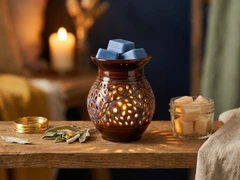
Tarts and wax melts
Golden Brands 494 holds a crisp shape and releases scent in a warmer.
See melt and tart wax
Candle Wax Comparison Chart
Every major candle wax type, side by side. Melt points and fragrance loads for the waxes we carry come from each manufacturer. The fragrance figures are the manufacturer-recommended maximums: you can load up to that maximum, but never past it. The wax retains only a certain amount of fragrance oil, and any excess separates instead of adding throw.
Candle Wax Comparison Chart
| Wax | Made from | Best for | Melt point | Max fragrance load | Finish | We carry it |
|---|---|---|---|---|---|---|
| Soy wax | Hydrogenated soybean oil | Containers, tealights | 115–130°F | 6–11% | Matte, can frost | Yes |
| Coconut soy wax | Coconut and soy waxes | Containers, single pour | 114–125°F | 5–10% | Smooth, creamy | Yes |
| Melt and tart wax | Soy with bio-based additives | Tarts and wax melts | 125°F | 5–10% | Firm, holds a mold shape | Yes |
| Paraffin container wax | Refined petroleum wax | Containers, strong throw | 115–129°F | 6–10% | Smooth, creamy | Yes |
| Pillar and votive wax | Refined petroleum wax | Pillars, votives, molded candles | 128–159°F | 3–6% | Smooth, glossy | Yes |
| Beeswax | Honeycomb wax made by honey bees | Pillars, tapers, unscented candles | 144–149°F | Not listed | Golden, natural honey scent | No |
| Palm wax | Palm oil, hydrogenated palm oil, or palm stearin | Molded candles | Varies by grade | Not listed | Varies by grade | No |
Types of Candle Wax
Each section below covers one wax type: what it is, what it is best for, and where to find it. Beeswax and palm wax are included so the comparison is complete, along with why we stock other waxes for those jobs.
Soy Wax

Soy wax is soybean oil that has been hydrogenated into a soft solid[1]. It melts at a low temperature, roughly 115°F to 130°F across the container blends we carry, and it cleans up with soap and water. Pure soy waxes such as Golden Brands 402 and 415 contain no additives. Enhanced soy waxes such as Golden Brands 444 and 464 carry a soy-based additive that lets them pour hotter, which reduces frosting and raises the fragrance load. NatureWax C-3 is a single-pour soy that sets with a smooth top.
Best for: container candles, tealights, makers who want a renewable, plant-based wax.
Soy is too soft to stand on its own, so it is a poor fit for pillars and votives. Our soy wax guide compares every soy wax we carry, including 444 vs 464, and the soy wax page lists them with pricing.
Coconut Soy Wax

Coconut soy wax blends coconut and soy waxes into a creamy container wax. Golden Brands 454 gives excellent glass adhesion, reduces frosting, and sets with smooth, even tops on a single pour. It melts between 114°F and 125°F, holds 5 to 10 percent fragrance, and pours between 160°F and 170°F.
Best for: container candles where a smooth, polished top matters, single-pour batches.
Melt and Tart Wax

Tarts and wax melts sit in a warmer instead of burning on a wick, so they need a wax that holds a crisp shape in a clamshell or mold and releases scent at warmer temperatures. Golden Brands 494 is a soy wax with bio-based additives made for this job. It melts at 125°F and holds 5 to 10 percent fragrance. IGI 4794 votive blend, a paraffin, also works well for tarts and melts because of its relatively low melt point. Test either one in your warmer, since warmers vary in how much heat they put out.
Best for: wax tarts, wax melts, clamshell melts.
The How to Make Wax Tarts guide walks through the full process.
Paraffin Container Wax

Paraffin wax is refined from petroleum. It is a mixture of high-molecular-weight hydrocarbons that melts across a range, about 115°F to 154°F, rather than at one sharp point[2]. Container blends are formulated to adhere to glass and hold a high fragrance load. IGI 4627 Comfort Blend, 4630 Harmony Blend, and 4636 (J-50) are designed to pour once. IGI 4633 (J-223) usually pours once, and IGI 4786 needs a second pour for a smooth top. These blends melt between about 115°F and 129°F and hold 6 to 10 percent fragrance. IGI 1230 base paraffin is the exception at 3 to 4 percent; it is a harder base wax used with additives.
Best for: container candles with a strong hot throw, bright dye colors, a smooth and glossy finish.
Our paraffin wax guide compares every paraffin grade we carry, and Soy vs. Paraffin: The BIG Debate covers how the two compare on throw, burn time, and finish.
Pillar and Votive Wax

Molded candles need a harder wax that shrinks slightly as it cools, so it pulls away from the mold and releases cleanly. IGI 4625 Pillar Blend melts at 142°F and IGI 1239 Cut N Curl at 138°F; both pour between 170°F and 180°F. For votives, IGI 4794 Votive Blend melts at 128°F, and IGI 4761 Low Shrink Votive melts at 159°F and shrinks less, so standard votives usually need no second pour. These waxes hold around 3 to 6 percent fragrance.
Best for: pillar candles, votives, cut and carved candles.
See How to Make Pillar Candles and How to Make Votive Candles for each process, and pair the wax with our pillar molds.
Beeswax

Beeswax is made by honey bees to build their honeycomb. It is collected by melting the combs after the honey is removed, then filtering the wax[3]. Yellow beeswax melts between about 144°F and 149°F (62°C to 65°C) and has a natural honey odor[3].
Best for: pillars and tapers, unscented candles that show off its golden color.
Why we don't carry it: our wax lineup is built around candles scented with fragrance oil. The natural honey odor of beeswax blends with any fragrance you add, so the finished scent is harder to predict. Beeswax also melts well above the container waxes in this guide, which melt between about 114°F and 130°F, so it takes more heat to melt a full pool in a jar. For a scented candle, a soy or paraffin container wax gives the fragrance a cleaner base to work from.
Palm Wax

Palm wax is made from palm oil. The palm products used in candles are mainly palm oil, hydrogenated palm oil, and palm stearin[4], and their behavior changes noticeably from one grade to the next.
Best for: molded candles, where its harder grades can hold a shape.
Why we don't carry it: palm wax performs inconsistently across grades. In a patent filing from a palm oil processor, one palm grade was too soft to hold its shape without support, while harder grades formed cracks or an irregular surface, and palm candles can "sweat" oil onto their surface[4]. For pillars and votives, our paraffin pillar and votive blends release cleanly from the mold and give consistent results. Sourcing is also a consideration for many makers: in Southeast Asia, 45% of sampled oil palm plantations were on land that was forest in 1989[5].
Fragrance Load and Pour Temperature
Fragrance load is set by the wax, not the oil. Add fragrance oil when the wax is around 180°F and stir for two full minutes so it binds evenly, then let the wax cool to the pouring temperature listed for that wax. To work out how much oil a batch needs at your chosen load, use our Fragrance Oil Calculators.
Whichever wax you choose, test one candle before pouring a full batch. The wick, the vessel, and the fragrance all change how a wax burns, so a single test candle tells you more than any spec sheet. Never leave melting wax or a burning candle unattended[6].
Shop Candle Wax
Every wax in the chart that we carry is on our candle wax page. To narrow it down, go straight to the soy wax or paraffin wax collection. New to candle making? Our candle making starter kits are an easy first batch.