Everywhere you look there is another do-it-yourself project, and candle making is one of the most approachable to pick up. The basic process is short: melt the wax, add fragrance at the right temperature, set the wick, pour, and let the candle cure. What separates a candle that burns well from one that tunnels, smokes, or barely smells is a handful of details you can learn before you ever turn on the heat. Here is what to get right first.
Is Candle Making Hard?
Candle making is not hard, and the early failures are predictable. A candle that will not throw scent, a wick that drowns in its own wax, a top that cracks as it cools: each has a known cause, and each is avoidable once you know it. Small slips are easy to recover from, but skipped steps are what cause trouble, so the makers who struggle are usually the ones who guessed at a temperature or skipped the test burn. Respect the measurements and you will get a good candle on an early try.
What You Need to Make Candles
Candle making cannot be done well with things lying around the house. Crayons are not formulated to burn like candle wax and clog the wick; perfume is not made for an open flame; a kitchen pot is not ideal for hot wax. You will get a safer result, and a better candle, with supplies made for the job. These are the six categories to gather.
The Six Things You Need
Wax
Choose a candle wax made for candles and matched to your project, since container, pillar, and tart waxes behave differently. Our soy wax guide and paraffin wax guide help you pick.
Fragrance
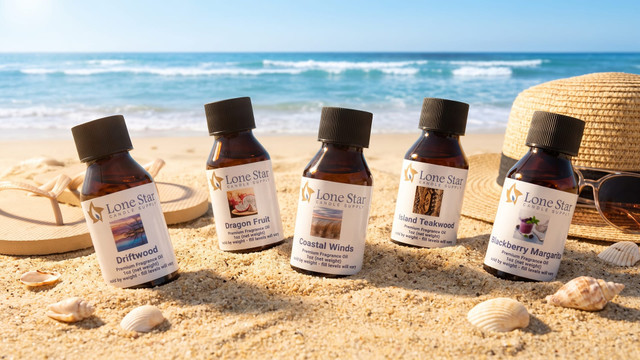
Use fragrance oils or candle-safe essential oils, never perfume. Every oil lists its IFRA maximum usage, flash point, and notes on its product page.
Wicks
A wick has to match the wax and the vessel width to form a full melt pool. Our guide to wicking sizes the right wick for your candle from the full candle wicks range.
Color
Candle dyes are optional and made to burn cleanly. Skip crayons entirely; they clog the wick.
Vessels and molds
Use a candle vessels or mold rated for the heat of poured wax. Glass candle jars are the common first choice; metal and silicone candle molds suit pillars and shapes.
Equipment
A thermometer to monitor the temperature of the wax, a digital scale to weigh wax and fragrance, and a pouring pot that handles the heat. Gloves protect your skin from fragrance oils, which can irritate skin, and from dye.
Measurements and Temperatures
The one place candle making asks for precision is the numbers. Two of them matter most: how much fragrance the wax can hold, and the temperatures you add fragrance and pour at.
Every wax holds a different maximum fragrance load, and a common starting point is one ounce of fragrance oil per pound of wax. Some waxes hold less, some hold more. You can load up to the manufacturer-recommended maximum for your wax, but never past it: wax retains only so much oil, and the excess separates instead of adding scent throw. Weigh both the wax and the fragrance on a scale so you never have to convert fluid ounces to weight. The recommended load for each wax is on its product page, and our Fragrance Oils FAQ and scent guide cover how load, temperature, and cure work together.
Temperature drives whether the fragrance binds and whether the surface sets clean. Add fragrance to soy and paraffin around 180°F so it binds evenly into the wax; some waxes, such as palm, take fragrance higher. Each wax then has its own pour temperature, listed in our How to Heat & Pour Wax for Candle Making guide. Pour too hot and the wax can set rough, sink, or stress the glass; pour too cold and you get jump lines and poor adhesion to the jar.
The Three Temperatures to Watch
| Stage | Soy and paraffin | Why it matters |
|---|---|---|
| Add fragrance | Around 180°F | Lets the oil bind evenly into the wax for a fuller throw |
| Pour | Per the wax's spec | A smooth surface, good jar adhesion, no sinkholes |
| Cure | Room temperature, about a week | The wax binds the fragrance before the first burn |

Flash point is worth understanding early. It is the temperature at which a fragrance oil can ignite if it meets a spark or open flame[1]. It is safe to add fragrance to wax that sits above the oil's flash point; the practical rule is to keep the oil away from open flames while you work. Every oil's flash point is on its product page.
Test Before You Scale
The mistake that costs beginners the most is making a batch before burning a single test candle. You can measure everything perfectly, pour a candle that looks great, and still find it has a strong cold throw and a weak hot throw, or a wick that runs too hot or too cool. The best way to know is to test burn one.

Keep basic fire safety in view from the first pour. Burn candles on a sturdy, heat-resistant surface, never leave a burning candle unattended, and keep flames clear of anything that can catch fire[2]. The candle industry's own fire-safety standard sets the labeling and performance expectations finished candles are built to[3]; our Candle Making Safety Tips cover the working habits that keep your space safe.
Your First Project
The fastest way to learn is to make one candle well, then change one thing at a time. Start with a container candle, then browse the full Learning Center for the wax, wick, and fragrance deep dives, follow the step-by-step Step by Step Guides for each candle type, and read Starting Your Own Candle Business when you are ready to sell. Take your time, follow the numbers, and the craft becomes one of the more satisfying things you can make with your hands.