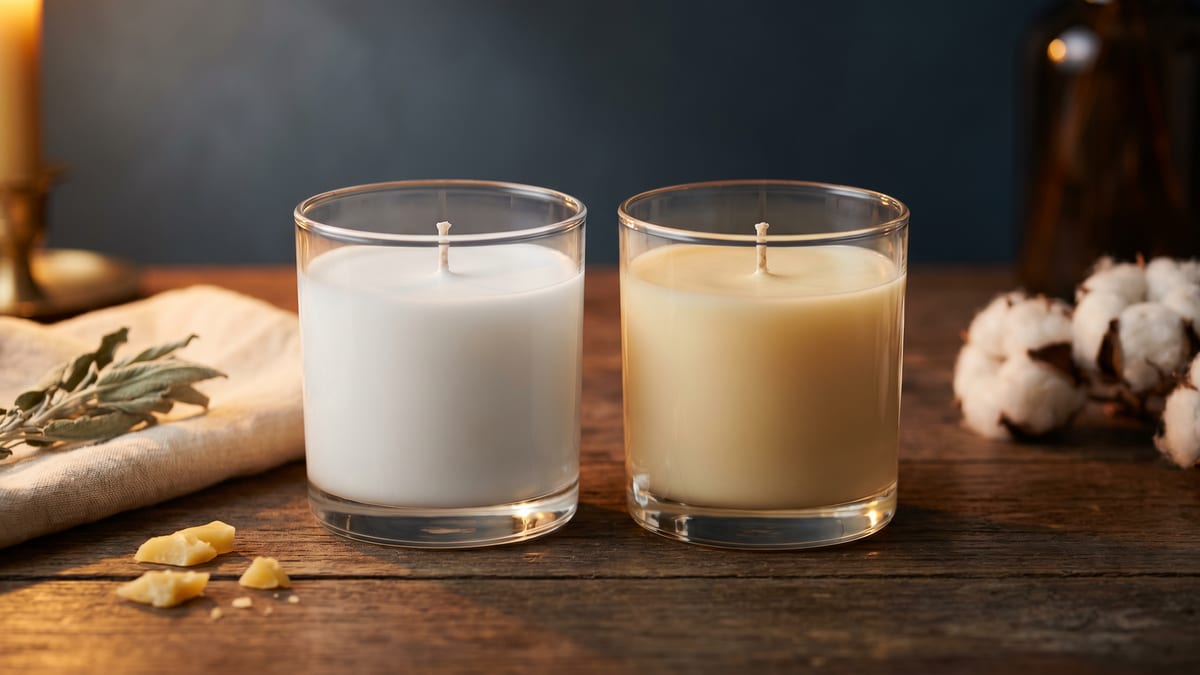
Every Lone Star fragrance oil lists its vanillin content on the product page, and the number predicts one thing well: how much a finished candle or soap may darken over time. It says nothing about scent strength. About 6 in 10 of our fragrance oils contain some vanillin, topping out at 16.6%, and more than 100 contain none at all. Knowing how the compound behaves lets you decide whether to work with the color change, counteract it, or avoid it.
What Vanillin Is
Vanillin is one of the components that give vanilla its distinct aroma[1]. It is an organic compound that forms as crystals on the outside of the cured vanilla bean. While vanillin occurs naturally in vanilla, most of the vanillin used in fragrances and flavorings is produced synthetically[2].
Vanillin vs Ethyl Vanillin
Ethyl vanillin is a synthetic compound similar in structure to vanillin, and many fragrance oils use the two together. The practical differences are small but worth knowing when you compare oils.
Vanillin vs Ethyl Vanillin
| Vanillin | Ethyl vanillin | |
|---|---|---|
| Source | Forms naturally on the vanilla bean; most supply is synthesized | Fully synthetic |
| Potency | Baseline | About three times stronger[3] |
| Note | The classic warm vanilla character | Similar, with a slightly different note |
| Effect on color | Oxidizes and darkens the finished product | The same, so less of it produces the same effect |
The vanillin content listed on a fragrance oil's product page reflects the combined effect of both compounds, so a single number tells you what to expect from the oil.
How Vanillin Discolors Candles and Soap
Fragrance oils that contain vanillin or ethyl vanillin oxidize faster than oils that do not, and oxidation darkens the finished product toward amber or brown[4]. The change can appear within the first week while a candle or soap cures, or take much longer; it depends on the chemistry of the specific wax or base you are using. The darkening does not affect scent throw. It matters only for the appearance you are trying to achieve.
You have three ways to handle it:
Working With Vanillin Color Change
Plan the color around it
If you dye your candles or soap, or want a warm amber tone anyway, vanillin's darkening costs you nothing. Some makers even use the discoloration to their advantage, incorporating the richer color into the overall look of the finished product.
Counteract it
If you want to minimize discoloration, a small amount of Whitening Powdered Dye can help offset the darkening caused by vanillin and keep the finished product closer to its original color.
Avoid it
More than 100 of our oils contain zero vanillin. If a product must stay light, start your scent search there; every product page lists the exact figure.
Vanillin Content Across Our Range
We publish the vanillin content of every fragrance oil we carry, so you can judge the color risk before you buy. Across the range of over 275 oils:
Vanillin by the Numbers
About 6 in 10 contain vanillin
Most oils carry at least a trace, which suits dyed and darker products fine.
About 1 in 5 run 5% or higher
This is the territory where undyed products visibly amber; plan the color or counteract it.
The ceiling is 16.6%
Bakery and dessert scents sit at the top of the range.
More than 100 contain none
Zero-vanillin oils are the safe pick for white soap and undyed candles.
The highest-vanillin oils we carry are the dessert scents you would expect: Snickerdoodle and Sweet Snow at 16.6%, Vanilla Cardamom at 15.6%, Marshmallow Madness at 15.1%, and Vanilla Satin at 14.9%. A vanilla-forward scent does not have to run that high, though: Warm Vanilla Sugar (type) reads as rich vanilla at just 4.15% vanillin, which keeps its color shift mild.
Crystallization in Cold Weather
Fragrance oils that are higher in vanillin content may crystallize when the weather turns cold: the vanillin portion of the fragrance comes out of solution and appears as small white crystals in the bottle. The fix takes a few minutes.
How to Fix Crystallized Fragrance Oil
-
1
Keep the bottle sealed
The crystals are vanillin that separated in the cold, and nothing has gone wrong with the oil. Leave the cap tightly closed so no water gets in during the next step.
-
2
Stand the bottle in very warm water
Set the sealed bottle in a container of very warm water until the white crystals melt back into the oil. You can optionally place the bottle in a plastic bag first to protect the labeling.
-
3
Swirl and check
Swirl the bottle to mix the fragrance back together. Once the oil looks uniform again it is ready to use; the integrity of the fragrance is not compromised by the separation.