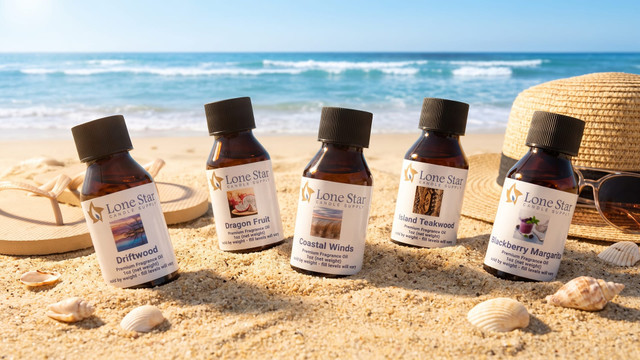
Scented bath salts start with Epsom salt, a skin-safe fragrance oil, and a soap colorant. You blend them by hand on a lined baking sheet, dry the salts so the scent and color stay put, and pour the finished product into an airtight jar. Epsom salt is easy to find, but a scent you actually want can be harder to buy, so making your own lets you match any fragrance you carry. The recipe below makes a small batch and scales straight up for a product line.
What You'll Need
What You'll Need
Check items off as you gather them
Supplies
-
Skin-Safe Fragrance Oil any of our fragrance oils rated skin-safe, with a usage level for the bath application on its IFRA certificate
-
Skin-Safe Dye a few drops of a skin-safe dye tints the batch; source one made for bath and body products, since our candle dyes are not skin-safe
-
Epsom Salt about two cups per small batch, the magnesium-sulfate soaking base[1]
-
A Jar With an Airtight Lid a candle jars jar with a twist lid and plastisol liner keeps moisture out
Tools & Equipment
-
Parchment Paper protects the baking sheet from oil and colorant
-
A Baking Sheet holds the salts flat while you blend and dry them
-
A Measuring Cup for measuring the salt
-
Stirring Utensil a spatula, whisk, or spoon, though most mixing here is by hand
-
Gloves latex or a non-latex alternative, to keep fragrance and colorant off your skin
Skip ahead to the step-by-step guide
The Recipe, Step by Step
How to Make Scented Bath Salts
-
1
Line the baking sheet
Cut a piece of parchment paper to fit and lay it over your baking sheet. This protects the sheet from the fragrance oil and colorant.

-
2
Measure the salt
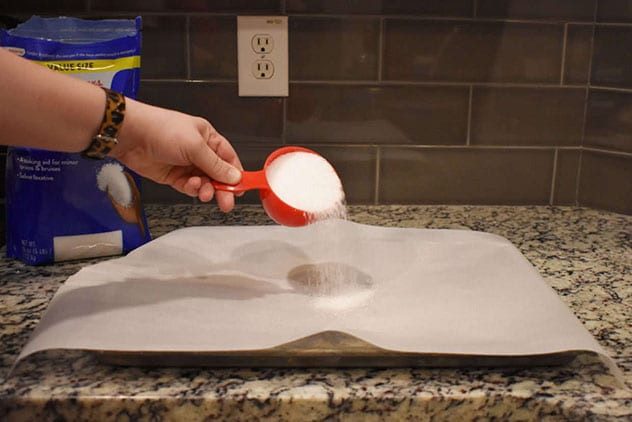
Measure out two cups of Epsom salt and sprinkle it onto the parchment.
-
3
Break up the clumps
Put your gloves on now and keep them on, both to keep the salt clean and to keep fragrance and colorant off your skin. Some of the salt will have clumped together. Break the clumps apart by hand.

-
4
Spread the salt out
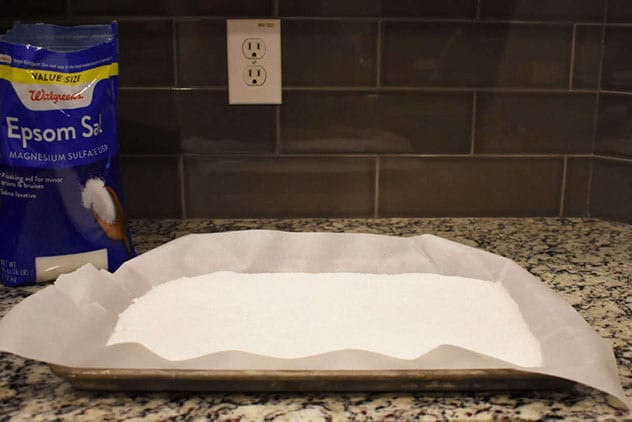
Spread the salt evenly across the parchment so the fragrance and color have room to reach all of it.
-
5
Add the fragrance oil
Add about one teaspoon of skin-safe fragrance oil, sprinkling it across the salt to disperse it. An eye dropper or pipette spreads it more evenly than pouring.

-
6
Add the colorant
Place a few drops of soap colorant onto the salt. Use more or fewer drops depending on how deep you want the color.

-
7
Mix it by hand
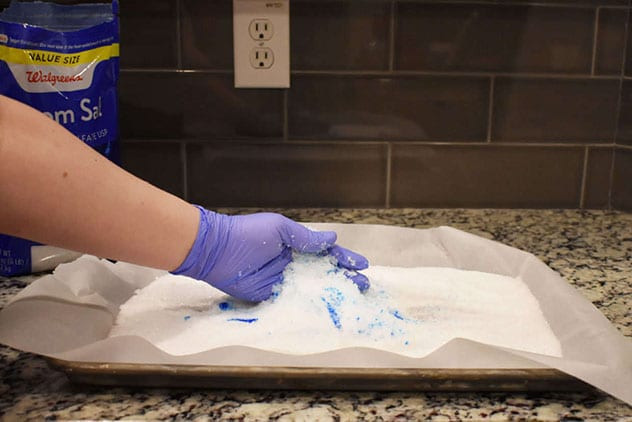
Pick up small handfuls and gently rub the salts together so the fragrance and colorant work all the way through. The color is even once everything is blended.
-
8
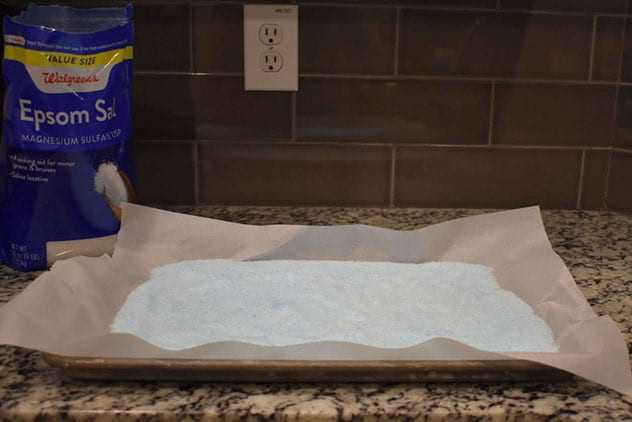
Spread it out to dry
Spread the salts back out thin and even so they can dry. Leave them several hours, or overnight in a humid climate. Drying matters: jar the salts while they are still wet and the oil and color settle to the bottom.
-
9
Jar the finished salts
Pour the dried salts into your jar. Use a jar with an airtight lid so moisture stays out and the salts do not dissolve in storage.

Making Bath Salts to Sell
Bath salts round out a fragrance product line on logistics alone: they need no heat, no wicks, and no cure beyond a drying rest, and they ship as a sealed dry jar. To repeat a batch reliably, measure the salt, oil, and colorant the same way each time and keep a batch log of the amounts and the date.
Stay at or under the IFRA usage level for the bath application on every batch, and label each jar with the scent name and ingredients. An airtight jar with a twist lid and plastisol liner from our candle jars selection keeps the salts dry on a shelf or in a customer's cabinet.
Bath salts also pair naturally with the rest of a flame-free lineup. Add How to Make Room Sprays, Linen Sprays, & Body Mists for a matching scent customers can take anywhere, or How to Make Reed Diffusers for one that runs on its own. Once you are jarring batches by the case, Starting Your Own Candle Business covers the selling side.