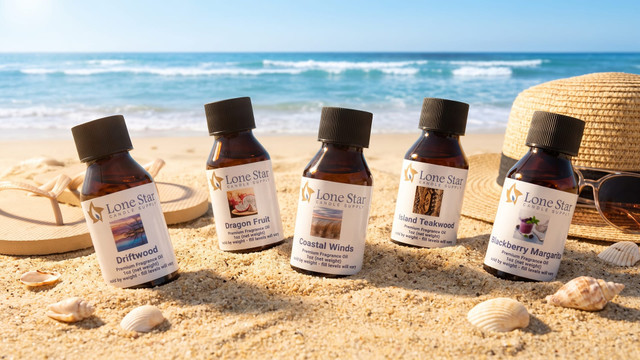
A bath bomb is a pressed ball of dry powders that fizzes when it hits the water. The fizz is a simple reaction: citric acid and baking soda stay quiet while they are dry, and the moment they meet water they react and release the bubbles you see[1][2]. A foaming powder called SLSa adds the foam and carries the color through the bath. This is a good project to make with kids, with an adult nearby for the one dusty step. Choose a soap-safe fragrance oil from Lone Star, then source the baking soda, citric acid, salt, and molds separately from a grocery store, craft store, or online retailer.
The whole process is: weigh the dry powders, work in the scent and color by hand, bind the mix with a little glycerin until it packs like damp sand, press it into a mold, and let it dry overnight. The batch below makes about five or six bombs roughly two and a half inches across, and it doubles or triples cleanly if you want more.
What You'll Need
The dry ingredients are pantry and craft-store items you measure by weight on a digital scale. The one thing to choose with care is the fragrance: use a fragrance oil approved for bath bombs and stay within its IFRA usage level for that application.
What You'll Need
Check items off as you gather them
Supplies
-
A Soap-Safe Fragrance Oil About 14 grams; use any of our fragrance oils approved for bath bombs and stay within its IFRA limit.
-
Baking Soda 10 oz; any grocery-store baking soda (sodium bicarbonate)
-
Citric Acid 5 oz; sold in the canning or craft aisle and online
-
Bath Salt or Sea Salt 5 oz; optional. Epsom salt works and is the choice for sore muscles
-
SLSa (Sodium Lauryl Sulfoacetate) 3 oz; foaming bath powder. Optional, but gives the bath bombs their foam and color.
-
Vegetable Glycerin the binder that holds the dry mix together
-
A Colorant A water-based or glycerin-suspended soap colorant, sourced from a craft or cosmetic supplier. Do not use mica; it can stain the tub.
-
A Two-Piece Bath Bomb Mold the round metal kind, sourced from a craft store or online
Tools & Equipment
-
Digital Scale the recipe is by weight; our digital scale reads finely enough
-
Mixing Bowl large enough to sift and hand-mix the dry powders
-
Stirring Utensil a whisk to sift the dry powders together before you add the wet
-
Gloves they keep hands clean and keep citric acid and color off skin and nail polish
-
Dust Mask wear it while weighing the SLSa; the fine powder can irritate your airways
Skip ahead to the step-by-step guide
A note on what to source where: the dry powders, salt, molds, and bath-and-body colorant are common craft and grocery items, so buy them wherever is convenient. Lone Star's part is the soap-safe fragrance oil. Our liquid and block dyes are formulated for candles and are not skin-safe, so do not use them in bath bombs.
How to Make Bath Bombs
Work in order: dry powders first, then the wet ingredients, and the glycerin binder last. The reason for the order is moisture. Citric acid and baking soda only fizz once moisture reaches them[1][2], and water-based colorants or witch hazel can start the reaction early. Add liquid ingredients gradually, and add the colorant a few drops at a time.
How to Make Bath Bombs
-
1
Weigh and sift the dry ingredients
Put on gloves and a dust mask. Weigh the baking soda, citric acid, salt, and SLSa into a bowl. Whisk them together thoroughly and break up any clumps by hand so the powder is even, then you can take the mask off once the SLSa is mixed in.
-
2
Add the fragrance and color
Weigh in about 14 grams of soap-safe fragrance oil and work it through by hand. Add the colorant a few drops at a time; it foams a little because it is water-based, which is exactly why you use it sparingly. Keep working it by hand until the color is even and no clumps remain.
-
3
Bind with glycerin
Add vegetable glycerin about one tablespoon at a time, mixing after each, until the texture is like damp sand that holds its shape when you squeeze a handful. A humid kitchen needs less; a dry climate can take three or four tablespoons. Glycerin is the binder to use here, not witch hazel, since witch hazel is water-based and starts the fizz early.
-
4
Pack the mold
Overfill each half of the two-piece mold so the powder mounds above the rim, press the halves together firmly, and give them a twist. Knock off any excess, tap the mold to release the bomb, and set it on a cushioned surface like silicone cupcake liners or a tray of dry rice.
-
5
Dry overnight, then wrap
Leave the bombs to dry in open air overnight. Do not leave them sealed in the mold, which slows drying. Once they are fully hard, wrap them airtight; shrink wrap is the most common choice. Wrapping a bomb before it has fully set traps moisture and ruins it.
Make It Your Own
The base recipe is a starting point. Once you have made a batch, you can adjust it to the kind of bath you want.
Ways to Vary the Recipe
Skip the Color or Scent
Leave the colorant out for a plain white bomb, or leave the fragrance out for an unscented one. The fizz works the same either way.
A Cold-and-Flu Fizzy
Scent the batch with peppermint or spearmint for a bright, clearing fizz that suits a stuffy-nose night.
Epsom for Sore Muscles
Use Epsom salt for the salt portion. The citric acid and baking soda are softening on dry winter skin, and the Epsom salt suits a soak after a hard day.
A Foaming Bath Salt
Stop before the glycerin and molding steps and you have a loose, effervescent bath salt instead of a bomb. Scoop it into the bath the same way you would loose salts.
Where to Take It Next
For more bath projects, our How to Make Scented Bath Salts guide covers the loose-salt version, and How to Make Hand Soap with Kids is another no-heat craft to do together. When you are choosing a scent, browse the soap-safe options in our fragrance oils collection; each lists whether it is approved for bath bombs and its IFRA usage level so you can scent a bath product safely[3][4]. Browse the rest of the Learning Center for more projects.