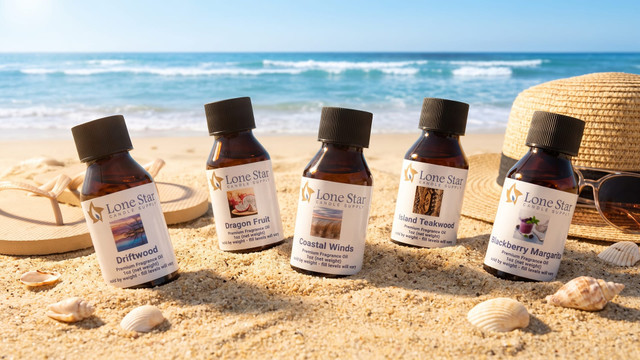
Candle gel is prized for one thing the other waxes cannot do: it stays transparent, so embeds, layers, and color show through a finished candle. That clarity is easy to lose with the wrong fragrance. A gel-safe oil is non-polar, which lets it blend evenly into the gel without clouding it, and it carries a flash point at or above 170°F, the threshold most gel manufacturers ask for. Lone Star marks gel compatibility on every fragrance oil's product page, so you can choose one without guessing. Over 60 of our fragrance oils carry the gel-safe flag today.
What Makes a Fragrance Oil Gel-Safe
Candle gel is a non-polar medium. A non-polar fragrance oil mixes into it cleanly because like dissolves like: substances of matching polarity blend, while polar and non-polar substances resist mixing[1]. Drop a polar oil into candle gel and it can leave the gel cloudy or separated. A gel-safe oil is formulated to be non-polar so the finished candle stays clear. Two specs on the product page tell you whether an oil will work.
The Gel-Safe Checks
Non-Polar
A gel-safe oil is non-polar, so it blends into candle gel without clouding or separating it. This is the property that keeps a gel candle transparent.
Flash Point at or Above 170°F
Candle gel is poured hot, so most gel manufacturers ask for an oil with a flash point of at least 170°F. Flash point is the temperature at which an oil can ignite if exposed to a spark or open flame, so keep the oil a safe distance from open flames.
Vanillin Content
Vanillin can darken clear gel to amber over time. The percentage is listed per oil, so you can pick a low-vanillin oil when you want the gel to stay water-clear.
Marked Per Oil
Gel compatibility is tested and listed on each fragrance oil's product page, alongside flash point and vanillin, so there is no guesswork.
How to Read the Gel-Safe Flag
Every Lone Star fragrance oil's product page lists its gel compatibility next to its flash point, vanillin content, and soap and skincare compatibility. Check the individual product page for the most reliable information; catalogs change quickly, and manual lists easily go stale. To see the current gel-safe selection, browse our fragrance oils and check the gel compatibility line on each oil before you buy. When you have narrowed to a few candidates, pour a small test batch to confirm the gel stays clear with your pour temperature and color.
Flash Point and Candle Gel
Flash point is the temperature at which a fragrance oil can ignite if exposed to a spark or open flame[2]. Candle gel is poured hotter than most container wax, so gel manufacturers set a higher bar: a flash point of at least 170°F. It is safe to add a gel-safe oil to melted gel above the oil's flash point; the safety advice is keeping the oil away from open flames while you work. For the full explanation of what a flash point is and how it affects a candle, see our guide to Fragrance Oil Flash Point: What Does it Mean?.
Vanillin and Clarity
A non-polar oil blends into candle gel without clouding it, but clarity has a second variable: vanillin. Vanillin is a fragrance component that can discolor wax and gel to amber over time, which is easy to miss in an opaque candle but obvious in a transparent one. Each oil's vanillin percentage is listed on its product page, so you can choose a low-vanillin oil when you want the gel to stay water-clear, and test for yourself before committing a batch. Our guide to vanillin content explains how vanillin causes discoloration and how much to expect.
Usage Levels
A gel-safe flag tells you an oil suits candle gel; it does not set how much to use. That comes from the oil's IFRA Certificate, which lists the maximum usage level for each application[3]. Real-world usage also depends on the gel base you are pouring into, so use the lower of the IFRA maximum usage percentage and the manufacturer's recommended load.
Every fragrance oil's detail page carries the data you need to pour a clear, well-scented gel candle: gel compatibility, flash point, vanillin content, and top, middle, and base notes. If you are choosing among scent families or building a blend, our scent guide walks through how a fragrance is built and how to combine oils.